Why Laser Cutting Qatar Is Transforming Precision Metal Fabrication in 2026
Metal fabrication is entering a new era in 2026 as manufacturers increasingly adopt advanced technologies to improve precision, productivity, and overall production efficiency. Construction, engineering, manufacturing, oil and gas, automotive, and infrastructure industries all require metal components that meet demanding specifications. As project designs become more complex, traditional cutting methods are often being supplemented or replaced by advanced solutions. This growing shift makes laser cutting qatar an increasingly important part of modern metal fabrication.
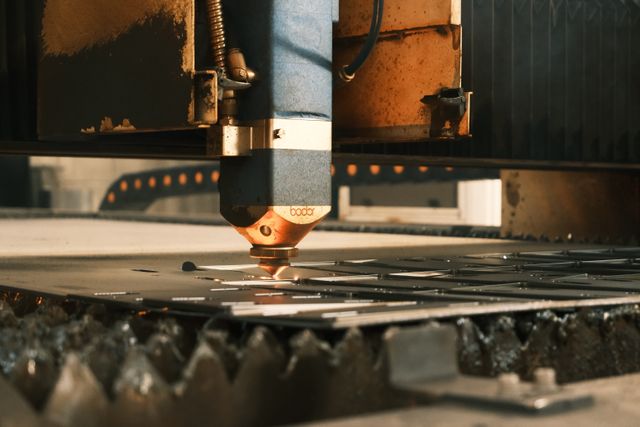
Laser cutting uses a concentrated beam of light to cut through metal with exceptional accuracy. Computer-controlled equipment follows digital designs, allowing manufacturers to produce detailed shapes, intricate patterns, and precise components with remarkable consistency. This combination of automation and precision is helping fabrication businesses in Qatar meet the requirements of increasingly sophisticated industrial and construction projects.
One of the most important advantages of laser cutting is its exceptional accuracy. Traditional cutting methods can sometimes produce rough edges, dimensional inconsistencies, or material deformation. Modern laser equipment provides highly controlled cuts with narrow kerfs and clean edges. This precision is particularly valuable when manufacturing components that must fit together accurately during assembly. Engineers and fabricators can work with detailed digital drawings while maintaining tight dimensional tolerances throughout the production process.
Speed is another major benefit. Modern laser cutting machines can process large quantities of material efficiently, helping manufacturers complete projects within demanding deadlines. Automated systems can move between different cutting patterns quickly, reducing setup and production time. Faster fabrication allows construction companies and manufacturers to receive finished components sooner, helping keep larger projects on schedule.
Laser technology also helps reduce material waste. Computer-controlled cutting systems can optimize the arrangement of components on a sheet before production begins. This nesting process allows manufacturers to make better use of available material and minimize unnecessary offcuts. For large-scale projects involving significant quantities of steel or other metals, even small improvements in material utilization can result in meaningful cost savings.
The versatility of laser cutting makes it suitable for a broad range of materials and applications. Depending on equipment capabilities, laser systems can process materials such as carbon steel, stainless steel, aluminum, and other sheet or plate products. Fabricators can produce brackets, panels, structural components, machine parts, decorative elements, enclosures, and customized industrial components. This flexibility enables a single technology to support numerous industries.
Construction is one of the sectors benefiting significantly from precision metal fabrication. Modern buildings increasingly incorporate customized structural and architectural elements that require accurate manufacturing. Laser-cut steel components can be used for brackets, plates, support parts, cladding elements, stair components, and other fabricated products. Precise cutting helps ensure that components are ready for efficient installation at the construction site.
Industrial manufacturing also relies heavily on accurate metal components. Machinery manufacturers require parts that meet exact specifications so equipment can operate safely and efficiently. Laser cutting enables fabricators to produce repeatable components with consistent dimensions, making it especially useful for mass production. Once a digital design has been programmed, the same pattern can be reproduced across numerous parts with minimal variation.
Automation is further changing the way fabrication companies operate. Modern laser cutting machines can integrate with computer-aided design software, automated material handling equipment, and production management systems. These technologies reduce manual intervention and improve production consistency. In 2026, businesses that combine automation with skilled fabrication expertise can achieve greater productivity while maintaining high-quality standards.
Another advantage is reduced secondary processing. Traditional cutting techniques may require additional grinding, deburring, or finishing to achieve the desired edge quality. Properly configured laser equipment can produce smooth and precise edges that reduce the need for extensive post-processing. This can save labor, shorten production cycles, and improve the overall efficiency of fabrication operations.
Safety and workplace conditions can also benefit from modern laser technology. Automated cutting reduces the need for workers to perform repetitive cutting tasks manually. With appropriate machine guarding, training, and safety procedures, operators can manage sophisticated fabrication equipment while reducing direct exposure to some hazards associated with conventional cutting operations.
Qatar's expanding construction and industrial sectors are creating new opportunities for precision fabrication services. Infrastructure development, commercial construction, industrial facilities, energy projects, and customized engineering applications all require reliable metal processing capabilities. Local manufacturers that invest in modern cutting technology can respond more effectively to complex project requirements while improving production efficiency.
Quality control remains essential as laser cutting becomes more widely adopted. Material type, thickness, machine settings, beam characteristics, cutting speed, and gas selection can all influence the final result. Experienced fabricators use appropriate parameters and inspection procedures to ensure that finished components meet project specifications. Combining advanced machinery with professional expertise is therefore critical for achieving consistent results.
Looking ahead, the role of precision fabrication technology will continue to expand as industries demand faster production, lower waste, and increasingly complex component designs. Laser cutting offers an effective combination of accuracy, speed, flexibility, and automation, making it an important technology for the future of metal manufacturing in Qatar.
For professional laser cutting solutions for construction, industrial, and fabrication projects, visit https://www.qatarsteelfactory.com/product/laser-cutting. Qatar Steel Factory provides precision laser cutting services designed to deliver accurate, efficient, and high-quality metal components for demanding applications.


Comments
Post a Comment